

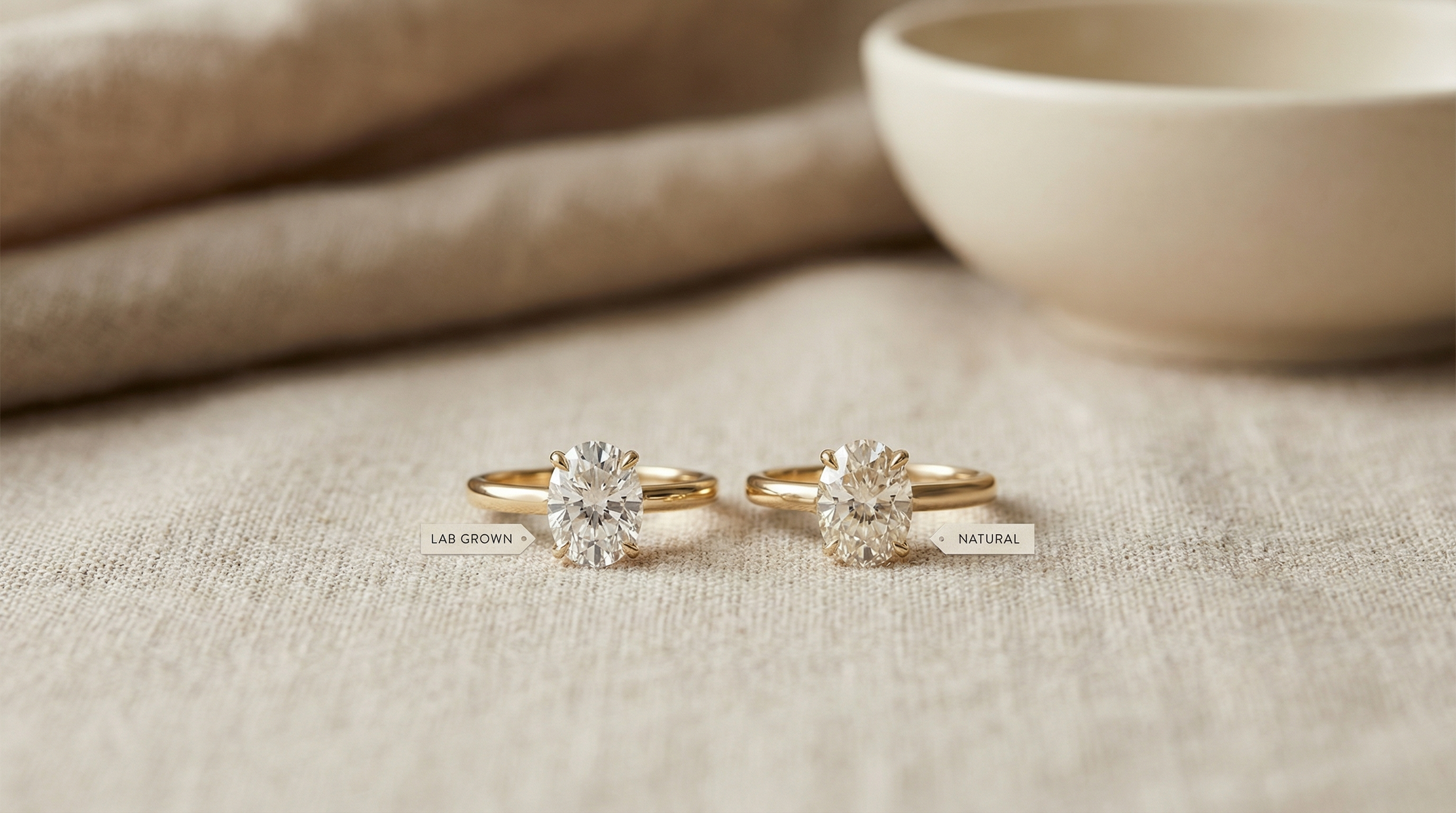
Choosing between a lab-grown and natural diamond engagement ring can feel overwhelming.
At first glance, they look identical.
Same sparkle. Same shape. Same brilliance.
So what’s the real difference?
The truth is—this decision has less to do with how the diamond looks, and more to do with how you value:
-
origin
-
pricing
-
tradition
-
and long-term perspective
This guide will walk you through everything that actually matters—without the noise, pressure, or outdated myths.

What’s the Difference Between Lab-Grown and Natural Diamonds?
A natural diamond is formed deep within the earth over billions of years.
A lab-grown diamond is created in a controlled environment using advanced technology that replicates that same process.
Here’s what surprises most people:
They are chemically, physically, and visually identical.
Even professional jewelers cannot tell the difference without specialized equipment.
Lab-Grown vs Natural Diamonds at a Glance
|
Feature |
Lab-Grown Diamond |
Natural Diamond |
|---|---|---|
|
Origin |
Created in a lab |
Formed in the earth |
|
Appearance |
Identical |
Identical |
|
Price |
30–70% less |
Higher |
|
Rarity |
More abundant |
Limited supply |
|
Resale Value |
Lower |
Higher (historically) |
|
Sustainability |
Lower environmental impact |
Varies by source |
|
Certification |
IGI / GIA |
GIA |
Price: Where the Real Difference Shows
This is where the decision becomes clear for most couples.
Lab-grown diamonds typically cost 30–70% less than natural diamonds of the same size and quality.
That means:
-
A 1.5ct natural diamond might equal a 3ct lab-grown
-
Or the same budget can go toward a better cut, clarity, or setting
👉 This isn’t about “cheap vs expensive.”
It’s about what you value more: size and quality, or rarity and origin.

Do Lab-Grown Diamonds Look Different?
No.
Once a diamond is cut and set, there is no visible difference between lab-grown and natural.
They reflect light the same way.
They sparkle the same way.
They wear the same over time.
If your concern is:
“Will people be able to tell?”
They won’t.
Value: What Most People Get Wrong
Natural diamonds have historically held value better due to rarity.
Lab-grown diamonds:
-
are more accessible
-
and continue to become more efficient to produce
So yes—resale value tends to favor natural diamonds.
But here’s the better question:
Are you buying a diamond as an investment
or as a symbol of your relationship?
Because most engagement rings are never resold.
Sustainability and Ethics
Lab-grown diamonds:
-
require significantly less land disruption
-
avoid mining concerns
-
are often considered the more sustainable option
Natural diamonds:
-
can be responsibly sourced
-
but vary depending on origin and supply chain transparency
For many couples today, this factor plays a meaningful role.

So… Which One Is Right for You?
Choose a lab-grown diamond if you want:
-
Maximum size for your budget
-
Modern, practical value
-
A visually identical diamond at a better price
Choose a natural diamond if you value:
-
Rarity and tradition
-
Geological origin
-
Long-term perception of value
There’s no wrong choice.
Only what feels right for you.
Our Perspective at Genesis Stones
We believe buying a diamond should feel clear, not complicated.
That’s why we guide you based on:
-
what matters to you
-
not what’s traditionally expected
Whether you choose lab-grown or natural,
our goal is the same:
To help you find a ring you’ll never second guess.
Need Help Deciding?
If you’re comparing options and want a second opinion, we’ll walk you through it—honestly.
No pressure. Just clarity.

Frequently Asked Questions
Are lab-grown diamonds real?
Yes. They are real diamonds with the same chemical and physical properties.
Do lab-grown diamonds last forever?
Yes. They are just as durable as natural diamonds.
Is a lab-grown diamond cheaper because it’s lower quality?
No. The lower price comes from how they are produced, not their quality.
Can you insure a lab-grown diamond?
Yes. They can be insured just like natural diamonds.

